Nimbus Access Card Changes and Merlin RAP Eligibility (2026): What Changed, Why People Are Confused, and What It Means Now
Over the past few weeks, many disabled guests and families have reported sudden changes to the Access Card “symbols” and uncertainty about whether they still qualify for Merlin’s Ride Access Pass (RAP). This article untangles the two separate changes that became linked in people’s minds, explains what each organisation is responsible for, and lays out practical steps for anyone affected.
Note: This topic affects many people with hidden disabilities as well as physical disabilities. The goal here is clarity, not judgement. Where different sources use different wording, this article focuses on the consistent themes: how needs are assessed, how “symbols” are used, and what Merlin currently accepts for RAP eligibility.
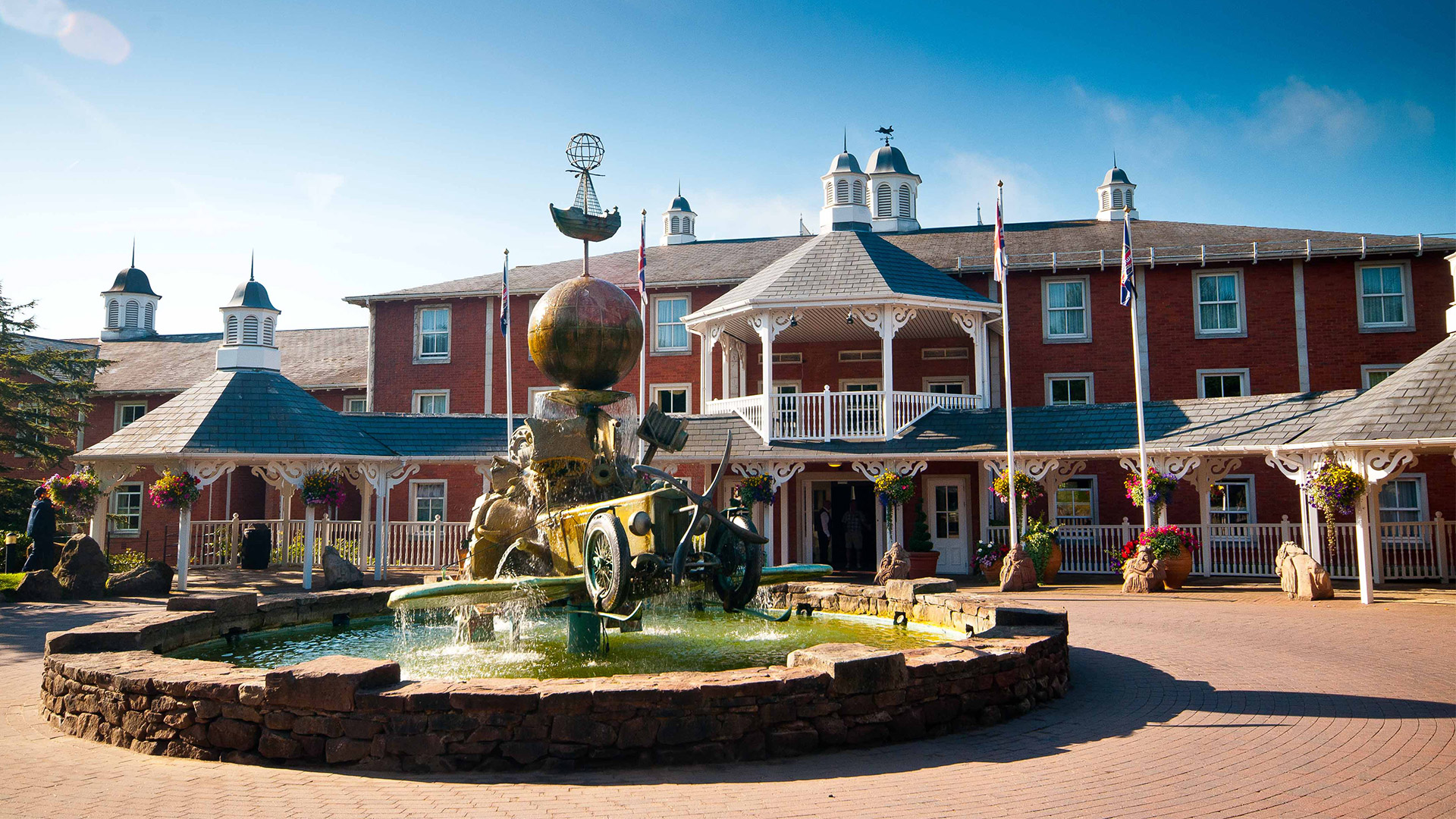
Alton Towers Resort Hotel Entrance and water feature
The key point most people missed
Two changes happened at the same time:
- Nimbus updated how it labels “standing and queuing” barriers so the meaning is clearer and more specific.
- Merlin narrowed which barriers it treats as qualifying for RAP and tied eligibility to a short list of accepted symbols.
The RAP eligibility focus (as currently described)
Merlin frames RAP primarily as a queuing adjustment for guests who are unable to stand in standard ride queues because of a disability or medical condition.
RAP is not the only possible adjustment, but it is the one that many families relied on because it reduced time spent in physical queues. When eligibility narrows, the practical impact is immediate: trip planning, anxiety, and on-the-day support all change.
1) The timeline: what changed and when
When a change feels sudden, it is often because the “official change” date, the “system change” date, and the “people notice it” date are different. In this case, many guests only noticed changes when their digital details appeared different or when RAP app access behaved differently.
- Earlier period: Nimbus begins work to improve symbol clarity and reduce “one label covering multiple very different barriers”.
- Rollout period: Existing accounts may see digital updates based on the information previously provided, even before a physical card is reissued.
- 2 February 2026: Merlin states it will accept a defined set of symbols for RAP eligibility at its UK theme parks.
- After 2 February: Guests with a “crowds” type barrier report being told they are no longer eligible for RAP, and are directed to Guest Services for alternative support.
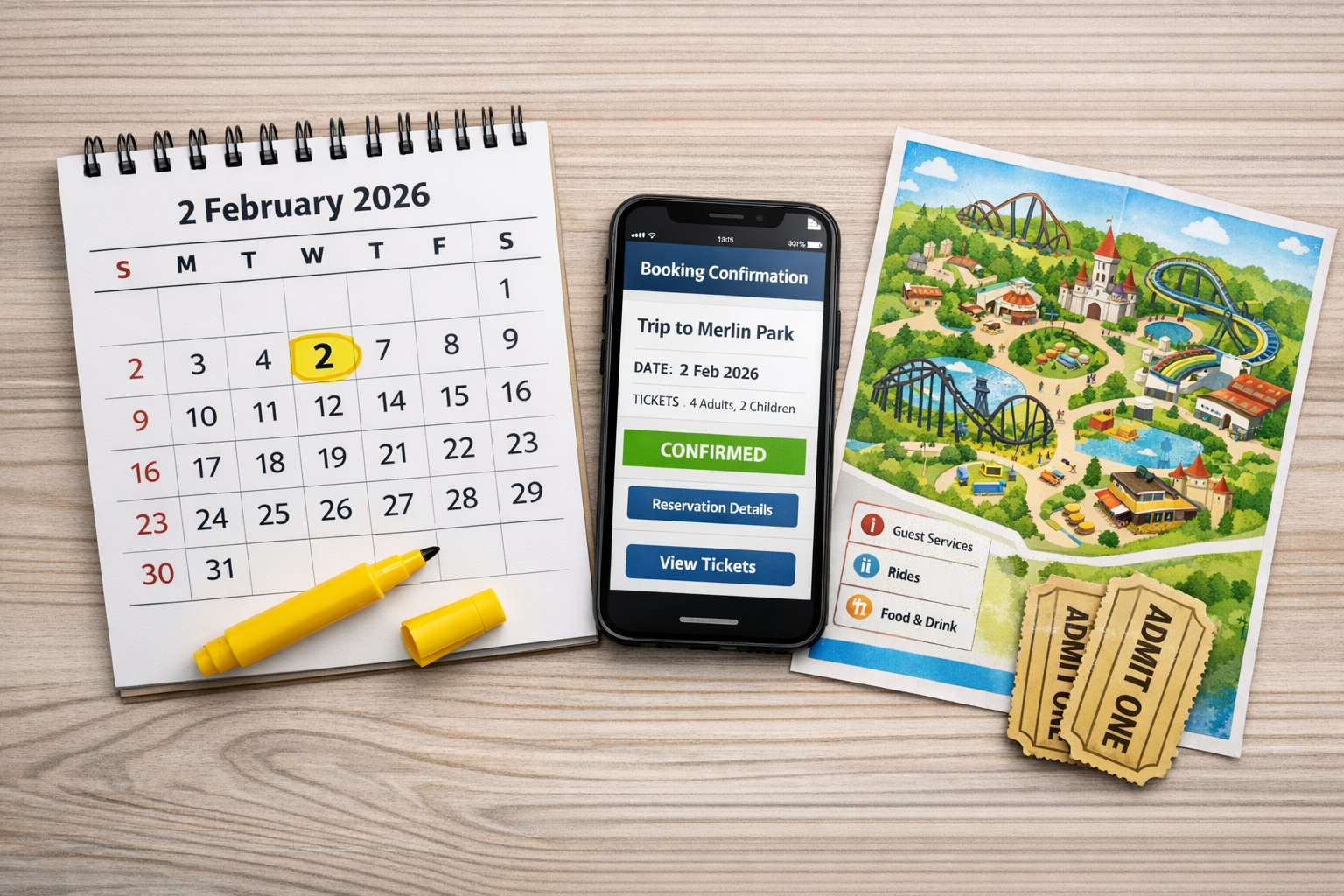
Flat lay of a calendar with a highlighted date, a smartphone showing a booking screen, and a theme park map. Clean, realistic photography.
2) What Nimbus changed: splitting “standing and queuing” into clearer barriers
Historically, many people experienced Access Card “standing and queuing” as a broad umbrella. In practice, that umbrella covered very different needs, including: physical inability to stand for long periods, and also distress or overload caused by crowds, enclosed spaces, noise, unpredictability, or panic risk.
The change people keep referring to is the split of “standing and queuing” barriers into separate ideas, commonly described as:
- Difficulty standing: typically tied to mobility impairment, pain, fatigue, balance, or medical conditions where prolonged standing is not possible or safe.
- Difficulty with crowds: typically tied to overwhelmed or distressed responses in crowded environments or queues, often linked to neurodivergence, anxiety, trauma, sensory processing, or similar.
Why this split can be helpful in principle: it stops venues treating “difficulty queuing” as a single, vague label, and instead encourages more accurate support. Why it caused backlash in practice: some venues (in this case, Merlin) appear to accept the standing-type barrier for RAP, but not the crowds-type barrier.
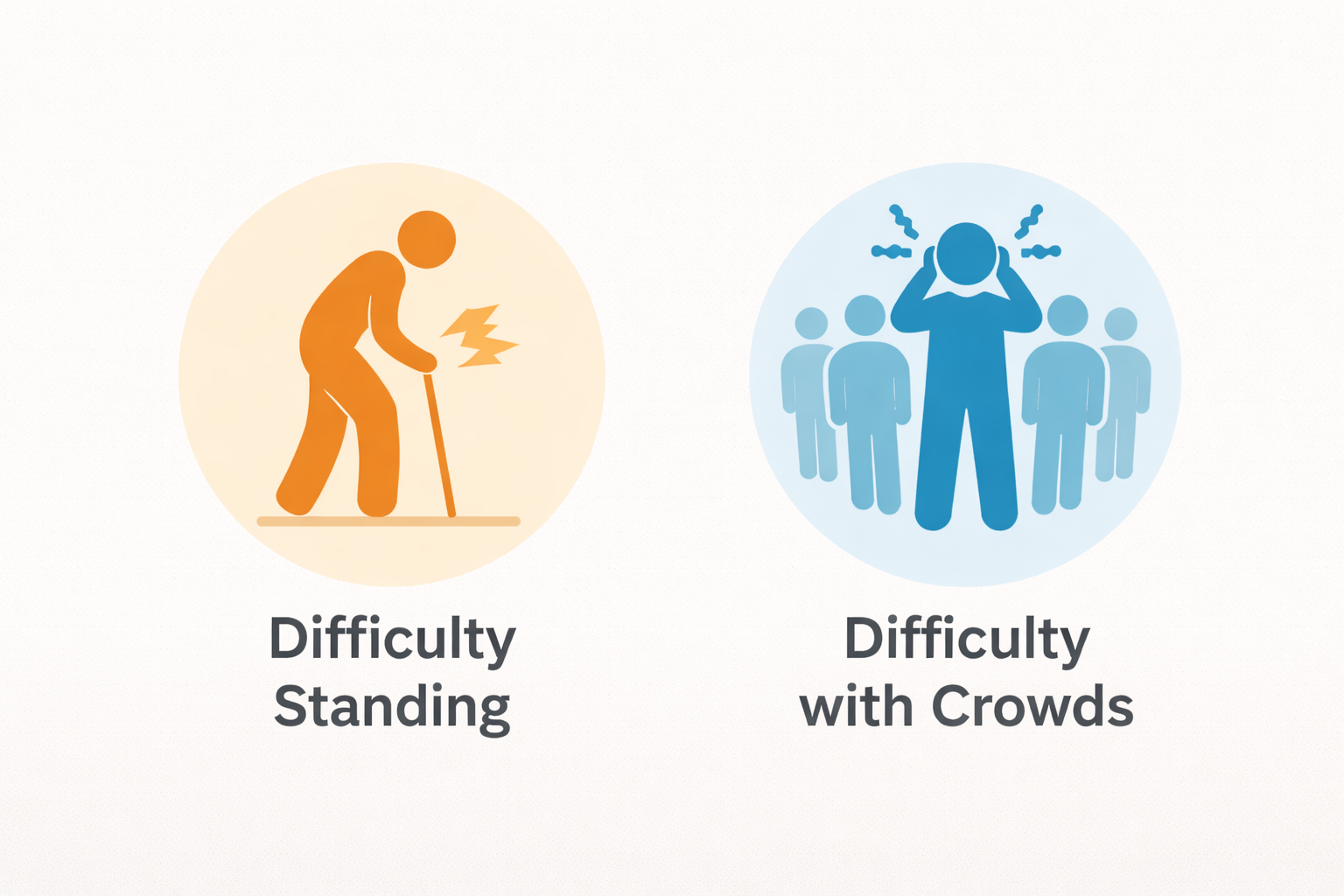
Two simple icon-style graphics side by side: one representing difficulty standing, the other representing difficulty with crowds. Clean, minimal design on a light background.
3) What Merlin changed: narrowing RAP eligibility to a short symbol list
Merlin’s Ride Access Pass (RAP) is described as a queuing adjustment that allows eligible guests to “virtually queue” rather than stand in standard queues. Merlin has also moved RAP usage into an app-based model across UK theme parks, with pre-booking and on-the-day management through the RAP app.
The symbol list being repeated across Merlin-facing guidance is commonly described as:
- Difficulty standing
- Level access (often relevant to wheelchair users and those needing step-free access)
- Urgent toilet needs
The immediate practical implication is that guests whose primary barrier is “difficulty with crowds” may be told they are not eligible for RAP, even if they previously qualified under older interpretations of “standing and queuing”.
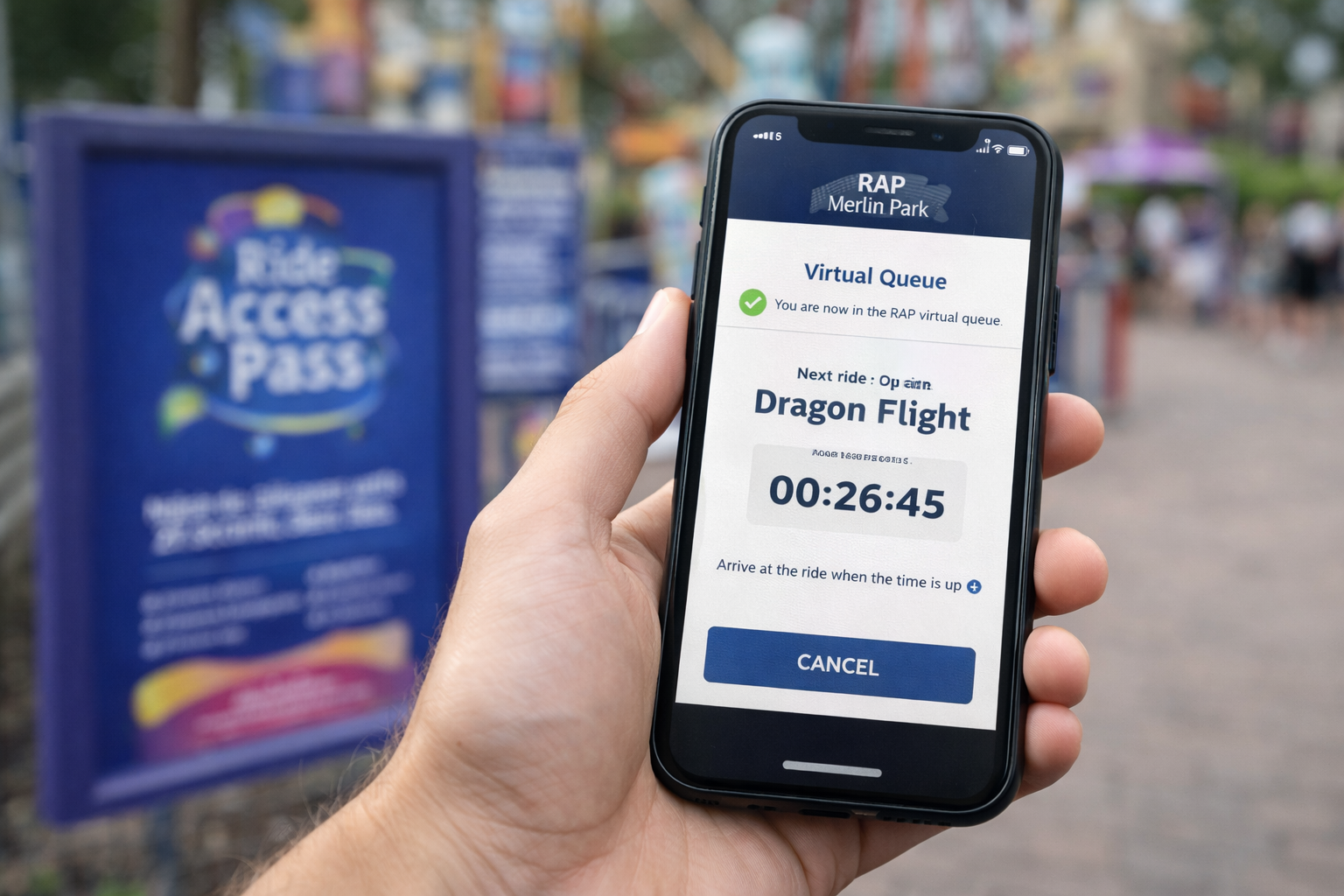
Person holding a phone showing a virtual queue screen, with blurred theme park signage behind. Realistic photography, candid style.
4) Why the confusion happened: the “perfect storm” problem
A lot of the anger is not only about the policy. It is about how the experience felt to families: unclear explanations, different answers from different staff, and the feeling that something important changed without enough notice.
- Digital vs physical mismatch: some people check their online details and see a different symbol set than they expected based on an older card or older wording.
- Eligibility vs adjustment confusion: “My need exists” is not the same thing as “this specific venue offers this specific adjustment for that need”.
- Booking fear: families worry that a trip planned around RAP will fall apart on the day, especially for children who rely on predictability.
- Hidden disability visibility: people who do not “look disabled” often report extra stress when they must repeatedly explain their needs at Guest Services.
- Communication style: short bullet lists and app prompts can feel cold and transactional when the stakes are a child’s meltdown risk or a medical consequence.
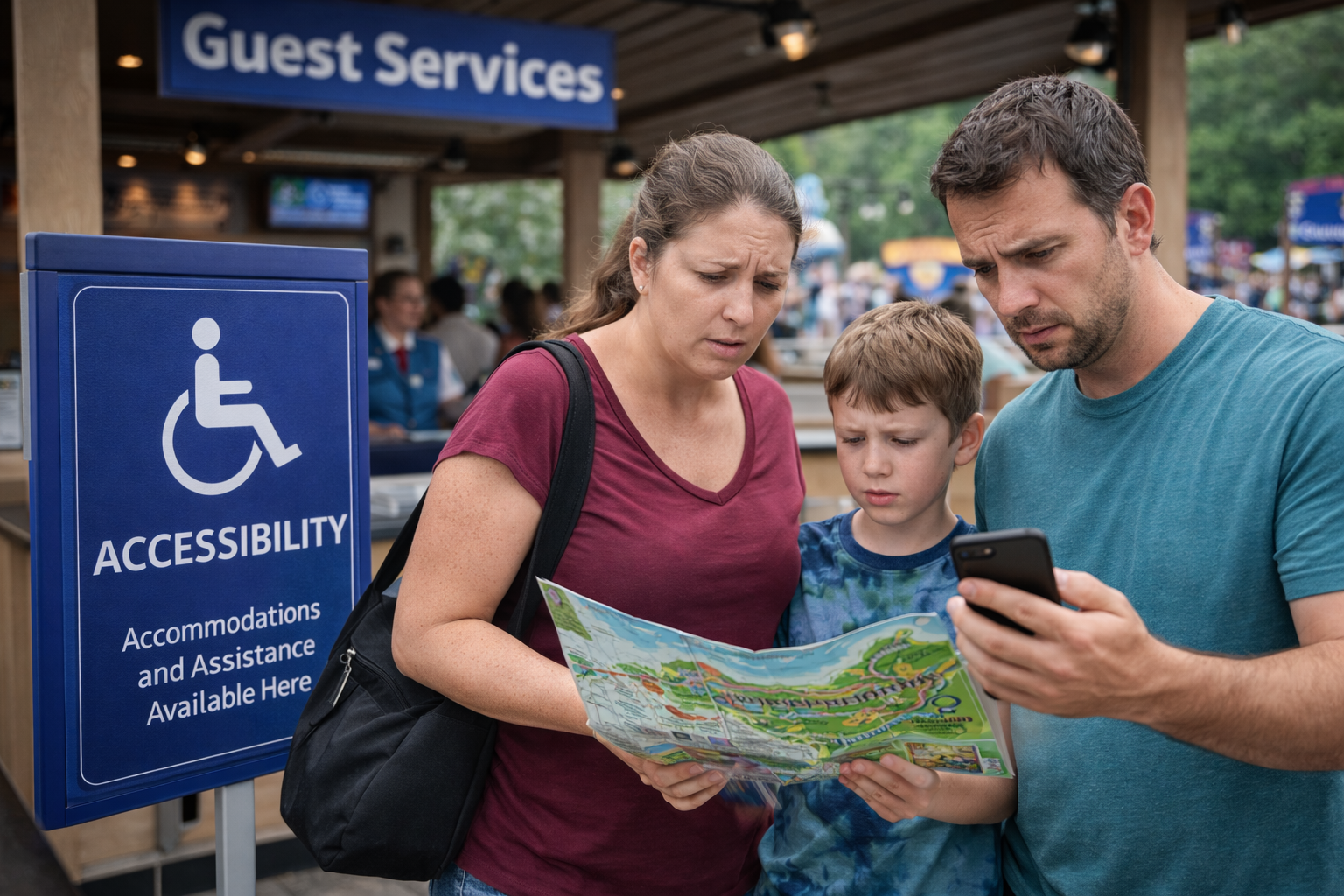
Theme park guest services desk with an accessibility sign, a family holding a phone and a map, looking uncertain. Realistic photography.
5) Who is most impacted: real-world scenarios (not just labels)
The most important point is this: queue barriers are not only about standing. Many people can stand physically but cannot cope safely with the queue environment itself.
- Autistic visitors: queues can trigger sensory overload, panic, or shutdown due to noise, crowd density, unpredictable movement, and confined spaces.
- ADHD and anxiety conditions: long waits in chaotic environments can lead to dysregulation, impulsive risk, or panic symptoms.
- Trauma-related triggers: crowding and constrained movement can be triggering and unsafe for some people.
- Medical needs that are not “urgent toilet”: people may need quick exit, temperature control, reduced exposure to heat, or reliable access to medication routines.
- Mobility-related needs: those who cannot stand, experience severe pain, fatigue, balance issues, or have conditions where prolonged standing is dangerous remain central to RAP’s stated purpose.
This is why the debate is so intense. Two families can both say “queues are impossible for us” and mean entirely different things. When a venue accepts one definition and not the other, people experience it as exclusion rather than classification.
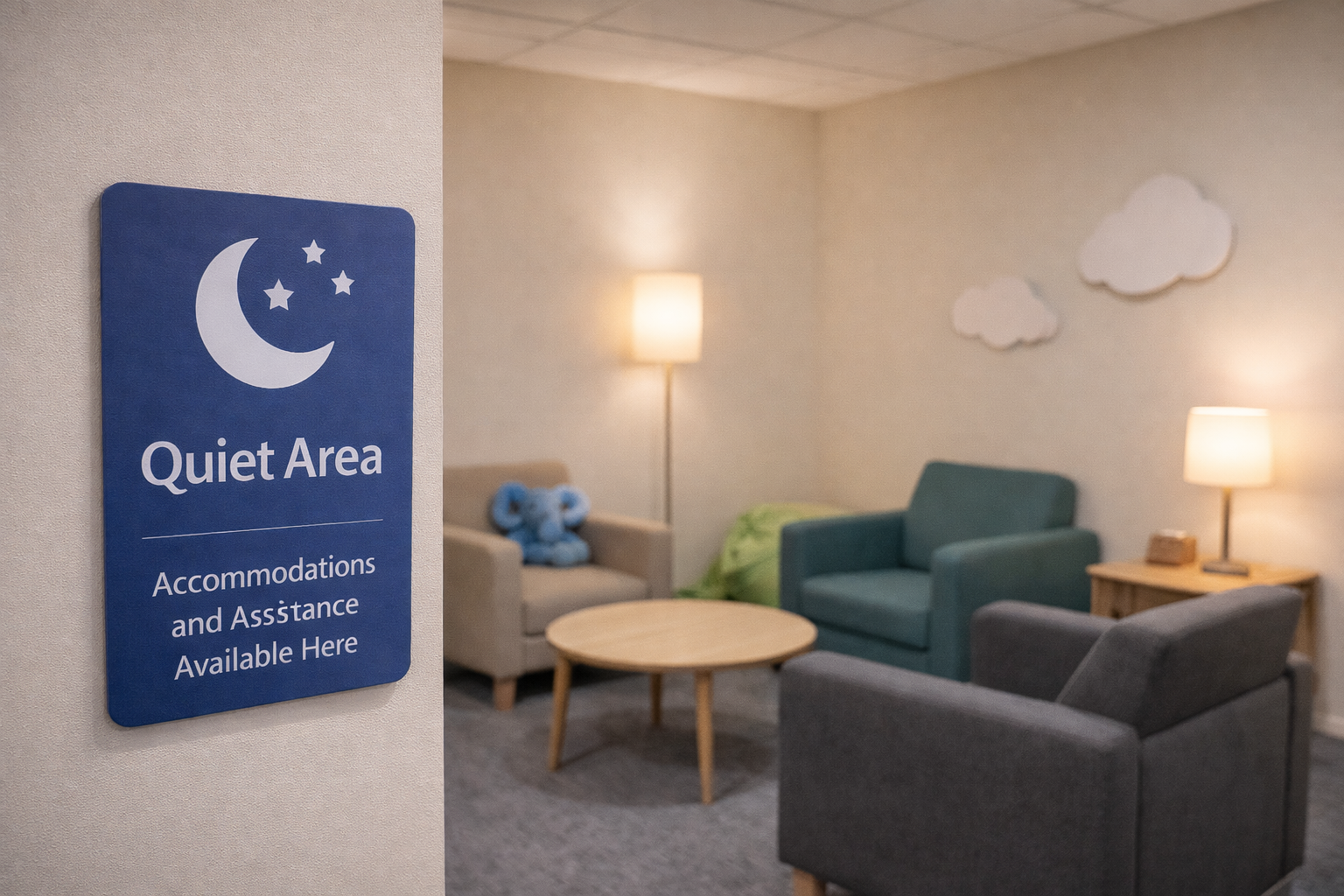
indoor quiet area with soft lighting, simple signage, and seating designed for decompression. Realistic photography, welcoming feel.
6) How to check what you currently have (and what to screenshot)
If you are worried about a planned visit, focus on evidence and clarity. Do not rely on memory of what you had “last year”. Check what is currently displayed in your account or confirmation details.
- Check your Access Card details: confirm your ID and current symbols as displayed.
- Check RAP app registration status: note what the app allows you to do (pre-booking, managing bookings, and on-the-day use).
- Write down visit details: park name, date, time window, and any pre-book confirmations.
- Document your need (briefly): a short, factual description of how queues affect you, focusing on safety and functional impact.
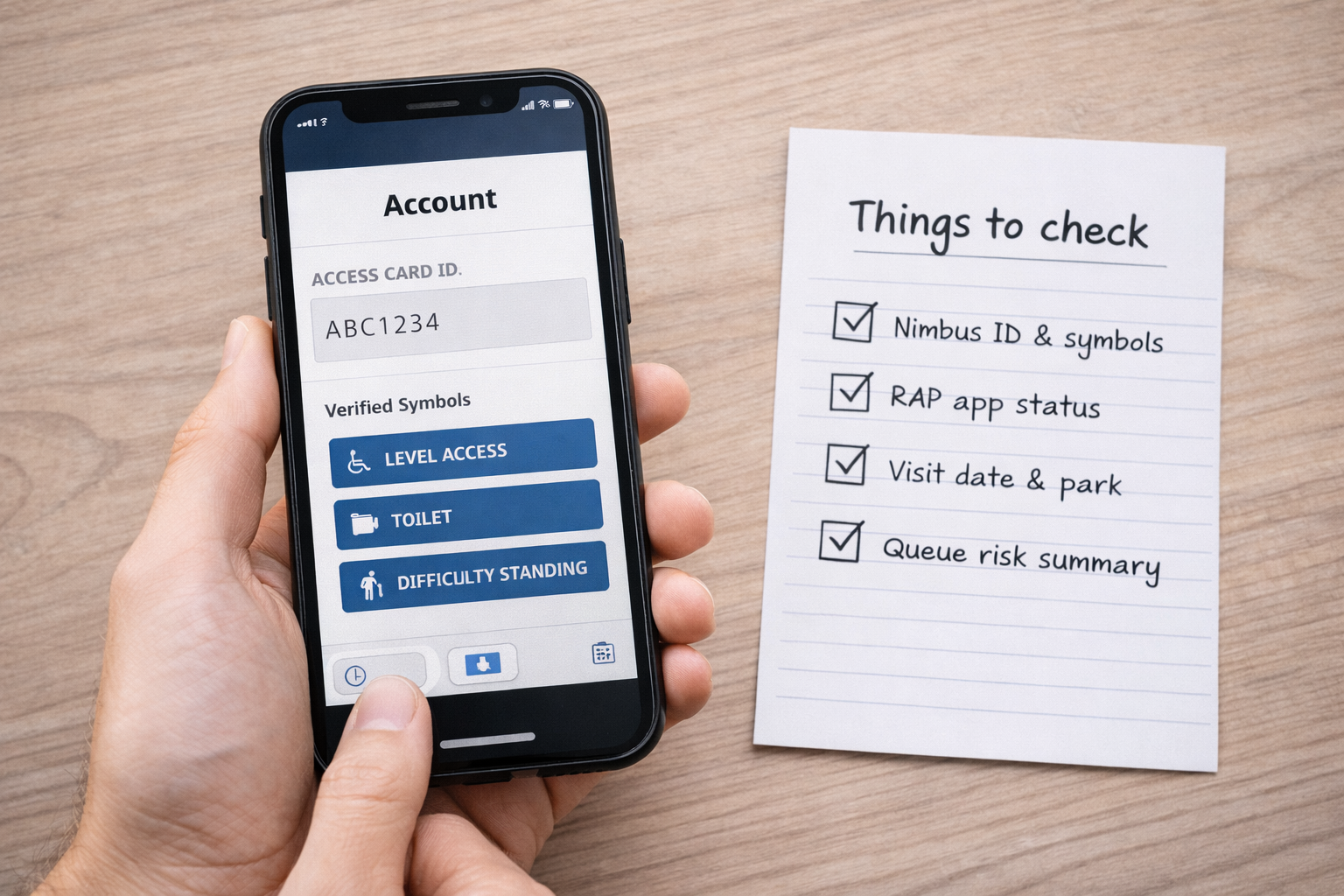
Hand holding a phone taking a screenshot of an account page, with a simple checklist on paper beside it. Realistic photography, clean layout.
7) What to do next: guest actions that actually help
There are two separate conversations to have, and mixing them up often leads to frustration: (1) Is my Access Card information accurate? and (2) What adjustment will Merlin provide for my needs?
- If your symbols look wrong: ask Nimbus for a review. Be clear about the functional barrier and provide supporting detail if requested.
- If your symbols are correct but you are excluded from RAP: contact Merlin accessibility support before your visit (if possible) and ask what adjustments are available at your specific park.
- Plan for the day: identify the location of Guest Services, quiet spaces, first aid, accessible toilets, and exit routes from busy areas.
- Bring a short “needs summary”: one paragraph that explains the issue in practical terms (for example: elopement risk, panic symptoms, meltdown risk, inability to remain in confined crowds).
- Ask for specifics: “What is the adjustment offered, how does it work, what is the process, and what limits apply?”
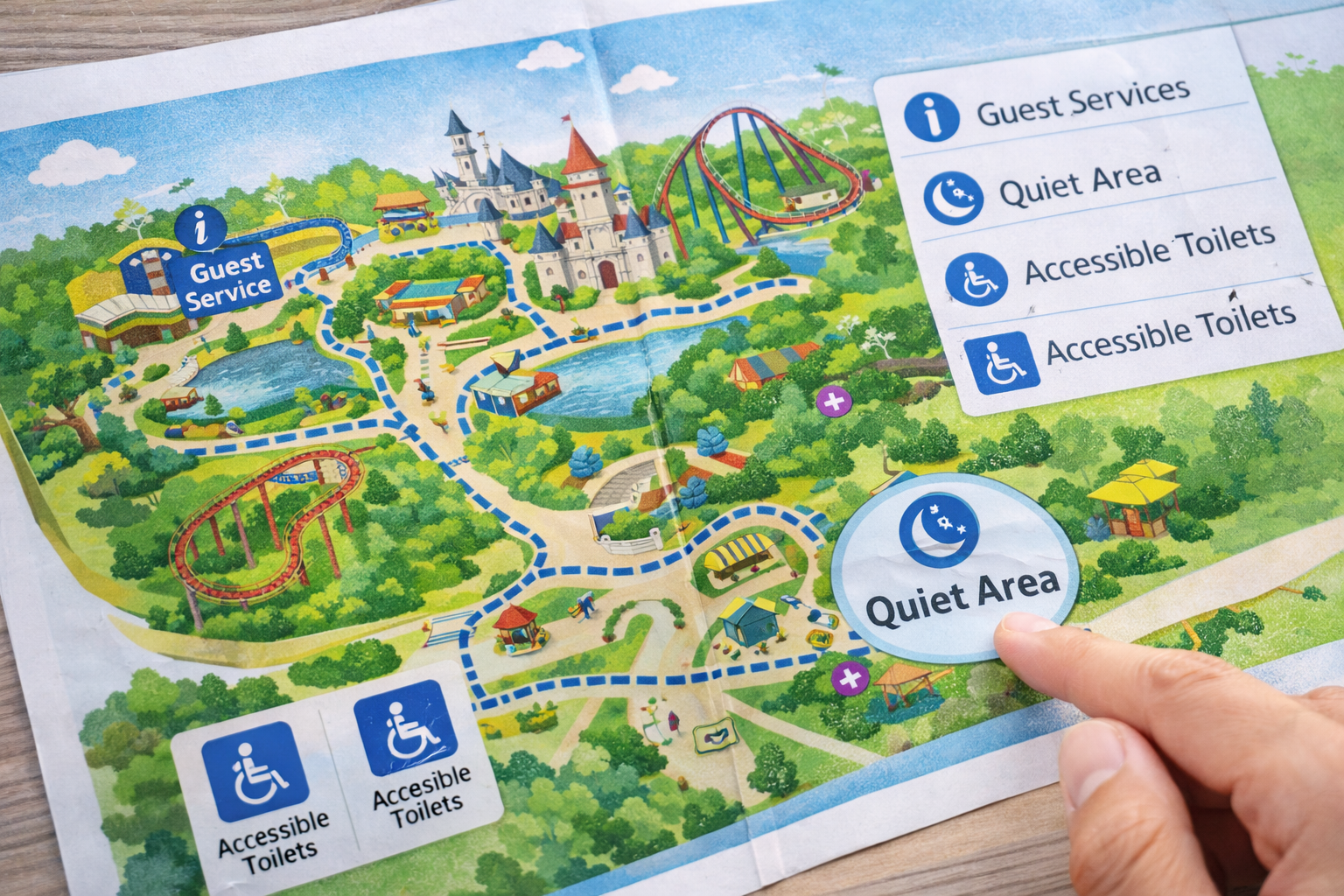
Theme park map with highlighted accessible routes, guest services, quiet areas, and accessible toilets. Realistic photography.
8) If you are not eligible for RAP: what “reasonable adjustments” can still look like
Many people hear “not eligible for RAP” as “no support”. In reality, a venue can offer multiple adjustments. The problem is that these adjustments are not always explained clearly, and can vary by park and operational constraints.
- Guest Services support planning: a structured conversation at the start of the day to reduce uncertainty, map quieter times, and identify calm spaces.
- Alternative queuing methods: in some cases, staff may offer a different route, timing approach, or return-time style waiting depending on the attraction and capacity.
- Quiet spaces and decompression: access to a calmer environment can be the difference between staying all day and leaving after one hour.
- Carer and companion arrangements: making entry, exits, and supervision safer, especially for children with elopement risk.
- Clear, written instructions: simple steps reduce conflict and stress, especially when different staff members give different verbal explanations.
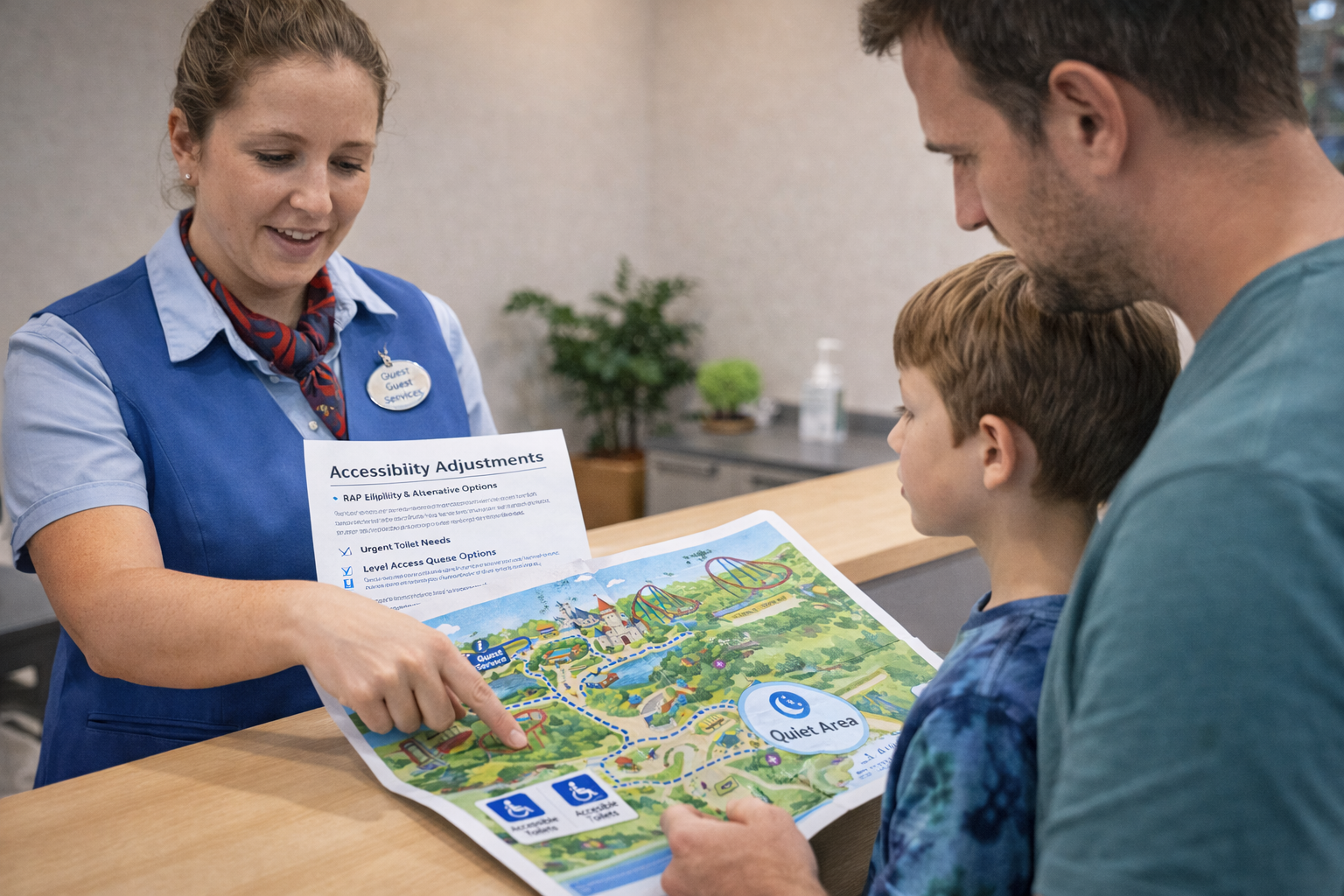
Guest services interaction in a calm environment, staff providing clear printed guidance and pointing to a map. Realistic photography, respectful tone.
9) For venues: what this situation reveals about accessibility, trust, and policy design
Even if you are not a Merlin venue, this controversy is a case study in what happens when classification systems and customer-facing adjustments drift apart. The loudest backlash usually comes from three failure points: unclear change communication, inconsistent front-line application, and a gap between policy language and lived reality.
- Barrier-first design: define what the queue environment is like (noise, confinement, unpredictability, crowd density) and who it excludes.
- Adjustment matching: an adjustment designed for standing intolerance may not help distress intolerance, even though both relate to queues.
- Communication: publish a plain-language summary that answers: “If you used X before, what happens now?”
- Consistency: train staff on exact wording and steps, and give them a simple written script. Consistency reduces conflict.
- Feedback loops: create a route for disabled guests to report “this did not work” in a structured way, not just via social media.
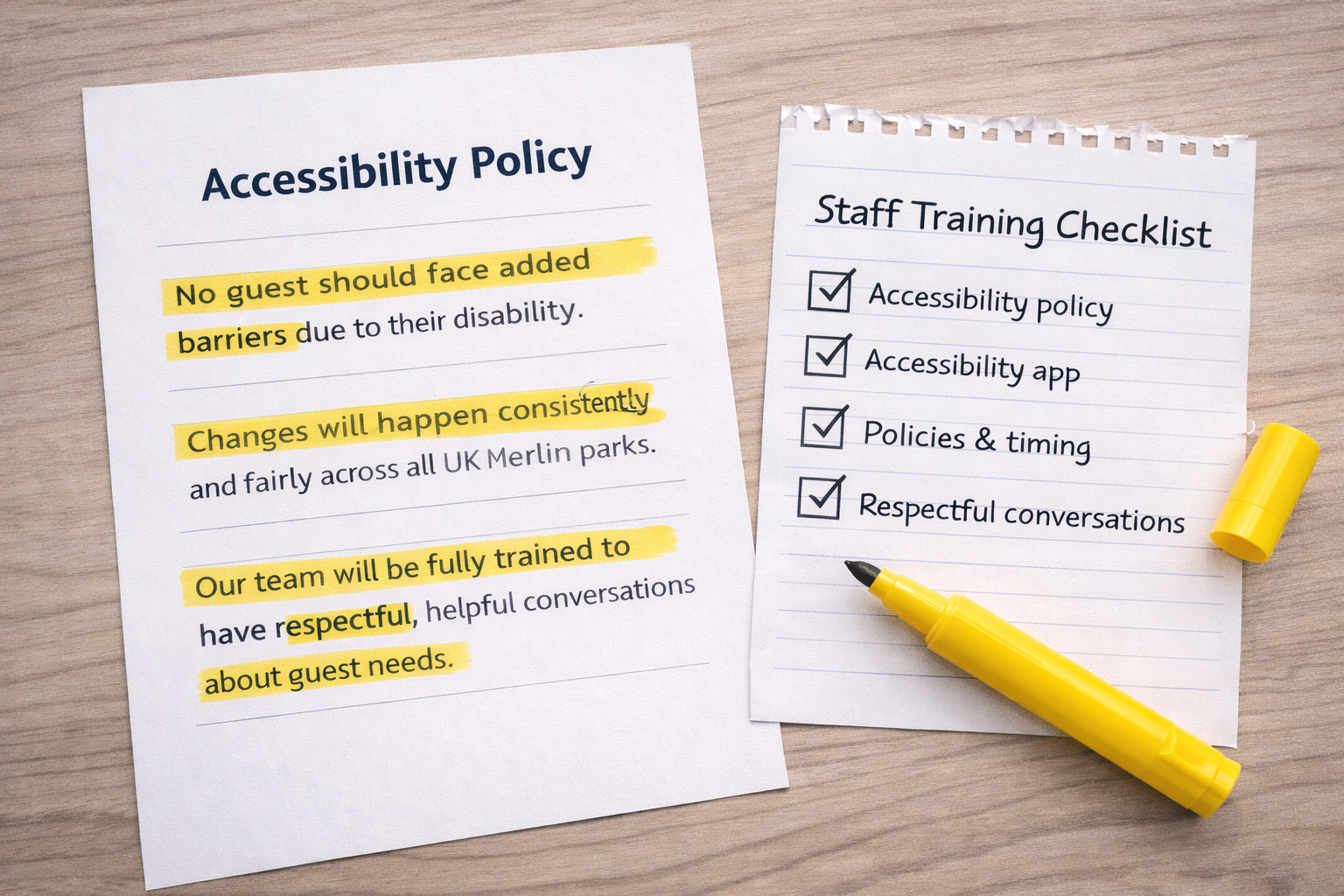
Accessibility policy document with key lines highlighted, beside a staff training checklist. Clean, realistic photography.
Support and community help (UK-focused, useful for planning and advocacy)
If this situation is affecting your family, you are not alone. These types of policy changes can trigger huge uncertainty, especially for neurodivergent children who rely on predictability. Consider seeking support in places that focus on practical planning, disability rights understanding, and family advocacy.
- Autism and neurodivergent community support forums: practical “what worked” advice for visits, quiet spaces, and coping tools.
- Disability rights advice services: help understanding what “reasonable adjustments” means and how to frame requests clearly.
- Local parent carer forums: families share real, current experiences of what is happening at specific parks.
- Condition-specific charities: many offer templates for describing functional impact in a way services understand.
Tip: When asking for help, focus on functional impact and safety outcomes. “We need to avoid physical queues because…” is more actionable than “we need RAP”.